


Home
>
Double Materiality and Stakeholder Analysis
Double Materiality and Stakeholder Analysis
Double Materiality Analysis
In 2025, we conducted a review and update of our double materiality analysis (areas of focus on environmental, social, and governance – ESG matters), integrating sector benchmarks, international frameworks, internal strategic documents, consultations with strategic business leaders, and the expectations of our stakeholders.
This analysis allowed us to refine the identification of impacts, risks,
and opportunities (IROs) relevant to the business and its stakeholders, with a focus on our dual strategy covering the Energy Services and Asset Management businesses.
Key aspects of the analysis
We analyze and identify the company’s impacts on people and the environment, as well as sustainability issues (environmental risks and opportunities) that have or may have a significant financial impact on the company and on compliance with the organization’s strategic objectives..
We incorporate our corporate risk management methodology, aligned with international good practices such as the COSO ERM standard. This framework establishes components that facilitate an understanding of the business, its objectives, the environment, and trends, to effectively link material issues with the company’s strategic risks.
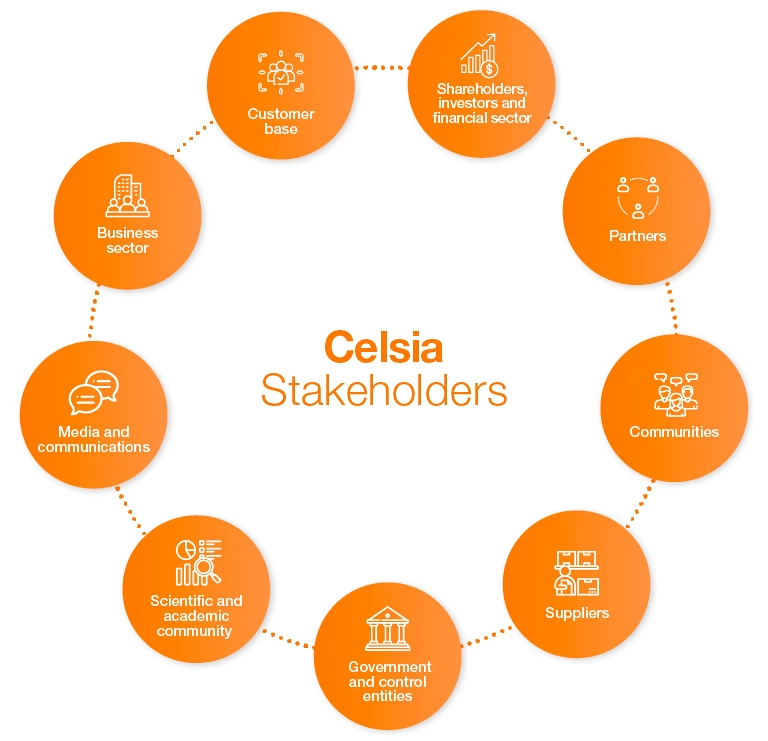
In our analysis, we consider the expectations and perceptions of our nine prioritized stakeholder groups through a quantitative assessment of probability and magnitude in relation to the impact these issues have on Celsia and on our strategic decisions.
▸ Double Materiality Methodology
At Celsia, we conduct our double materiality analysis in line with our dual strategy to understand how our operations generate impacts on people and the environment, as well as the risks and opportunities that may influence the company’s sustainability and resilience in the short, medium, and long term in both the Asset Management and Energy Services businesses. The methodology was developed in four main phases:

1. Context analysis: We developed a comprehensive understanding of the environment in which we operate, considering global and sector trends, ESG risks, stakeholder expectations, and key aspects of our value chain. This stage enabled us to build a strategic view of the context surrounding the company and its business model.

2. Identification of impacts, risks, and opportunities (IROs): We identified current and potential impacts, risks, and opportunities associated with our operations and value chain. To do so, we analyzed environmental, social, and corporate governance topics relevant to the energy sector and subsequently validated the findings with internal teams.

3. Assessment: We consulted internal and external stakeholders to assess the relevance of the identified IROs. This analysis included impact, severity, probability, and financial-effect criteria, making it possible to understand both the impact materiality and the financial materiality of each topic.

4. Prioritization: Finally, we consolidated and prioritized the results to define the company’s material topics through a double materiality lens. This exercise guides our sustainability strategy, strengthens decision-making, and contributes to more transparent, resilient management aligned with stakeholder expectations.
The double materiality analysis strengthened our understanding of the impacts, risks, and opportunities facing Celsia by integrating the business perspective and stakeholder expectations to guide more sustainable, resilient management aligned with long-term value creation.
The review and update of our double materiality assessment was approved by a steering subcommittee composed of the CEO, the Head (Vice President) of Corporate Affairs, and the Head of ESG.
▸ Materiality matrices
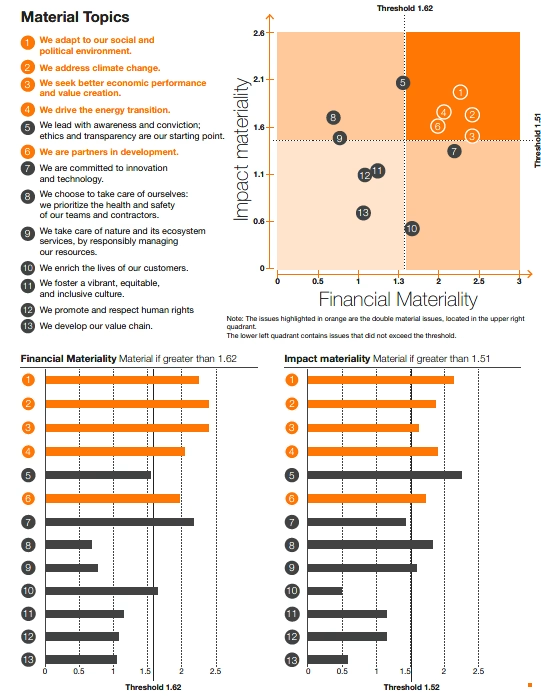
As a result, we present our material topics in a chart that groups them together, and in two charts that show financial materiality and impact materiality separately.
Our material affairs
Read each of our matters and the reasons supporting their materiality.
| Material topic | Rationale supporting its materiality |
|---|---|
| We adapt to our social and political environment. | Regulatory changes, the macroeconomic context, and social and institutional scenarios may affect asset operations, service delivery, and business stability. In addition, failure to meet quality, continuity, ethics, or transparency standards may create risks that result in sanctions, loss of trust, and greater barriers to accessing tenders or international financing.
In this changing environment, proactive regulatory compliance, the ability to adapt in a timely manner, and stronger relationships with institutions help reduce risks, keep operations running, protect and strengthen our reputation, and create favorable conditions for development. |
| We face climate change. | We understand that climate change affects the territories where we operate through extreme weather events, rainfall variability, and drought periods that may affect operational continuity and sustainable energy generation. Looking ahead, the transition to a low-carbon economy also entails new regulations, higher market expectations, and changes in the way business is conducted. Against this backdrop, we view climate change as an opportunity to anticipate, adapt, and transform. We work on solutions to strengthen our response capacity to climate impacts, reduce emissions, consolidate more resilient energy infrastructure, and advance business models aligned with a low-carbon future, contributing to the sustainability of the energy transition. |
| We seek better economic performance and value creation. |
Exposure to financial, regulatory, and market changes may affect income stability and business strength. Therefore, diversification toward renewable energy and low-carbon technologies, together with access to sustainable financing and incentives, enables us to strengthen competitiveness, protect long-term value creation, and provide greater confidence and stability to our shareholders. |
| We drive the energy transition. | The gradual decline in demand for fossil fuels, driven by regulatory changes, higher levels of energy efficiency, and a growing preference for clean energy, may affect revenues and create new challenges in relationships with governments and communities.
At the same time, grid modernization, electric mobility infrastructure, energy storage solutions, and the expansion of mechanisms such as renewable energy certificates create opportunities for strategic investment and for strengthening the energy transition. |
| We lead with awareness and conviction; ethics and transparency are our starting point. |
Growing expectations regarding integrity, transparency, and sound corporate governance mean that any ethical breach has a direct impact on reputation and trust. Likewise, fraud or legal noncompliance may result in sanctions, financial losses, and disruption to operational continuity.
In response, strong, diverse, and independent corporate governance with an ESG approach enables strategic decisions aligned with the environment, helps anticipate change, and maintains high ethical and compliance standards, strengthening reputation, customer loyalty and trust, and the company’s positioning. |
| We are partners in development. | We know that ongoing dialogue with communities and sound social and environmental management are essential to project development. When these processes are not timely or sufficient, conflicts, delays, and loss of trust may arise in the territories, affecting the continuity of initiatives and the creation of shared value. We strengthen close, transparent engagement based on dialogue and the joint development of solutions and benefits. This allows us to consolidate trust, strengthen our social license to operate, and advance project development in a stable and sustainable manner |
| We are committed to innovation and technology. | The adoption of digital technologies enables us to make the entire value chain more efficient, although it also brings cybersecurity challenges and possible failures that could affect service continuity.
At the same time, advances in digitalization and artificial intelligence, together with investment in renewable energy, create opportunities to optimize asset operation and maintenance, anticipate failures, improve supply quality, and strengthen the company’s competitiveness, generating sustainable value for territories and people. |
| We choose to take care of ourselves: we prioritize the health and safety of our teams and contractors. | Low-frequency, high-impact events such as serious accidents may affect operations, reputation, and our ability to continue conducting our activities normally and protect business stability. Therefore, strengthening a health and safety culture, together with the adoption of best practices, helps prevent incidents, protect people, improve productivity, and build trust with regulators and other stakeholders. |
| We take care of nature and its ecosystem services by responsibly managing our resources. | We recognize that nature management and efficient resource use are essential to the sustainability of the business and the territories where we operate. Challenges such as biodiversity loss, ecosystem degradation, regulatory compliance, and raw-material availability may affect project viability and increase costs. At the same time, these challenges create opportunities to innovate and generate value. We collaborate with institutions and communities, promote ecological restoration and nature-based solutions, advance circular economy practices, and foster responsible waste management. Using tools such as the LEAP methodology (Locate, Evaluate, Assess, and Prepare), we seek to anticipate risks, improve project planning, and contribute to the sustainable development of the territories. |
| We enrich the lives of our customers. | Growing customer expectations regarding service, together with inefficient tariff structures and stricter regulatory requirements, may create operational challenges and affect results and relationships with users. In this context, digital transformation and the adoption of technologies that improve customer service and operational efficiency become an opportunity to strengthen the customer experience, increase competitiveness, and build long-term relationships |
▸The Importance of Stakeholder Engagement
Aware that the materiality analysis is a dynamic and participatory exercise that supports strategy execution, we included our stakeholders in the materiality analysis. As a result, we identified the key topics that are important to them, either because they view them as an opportunity or a risk for Celsia, or because they regard them as a positive or negative impact generated by us.
La importancia del involucramiento de los grupos de interés
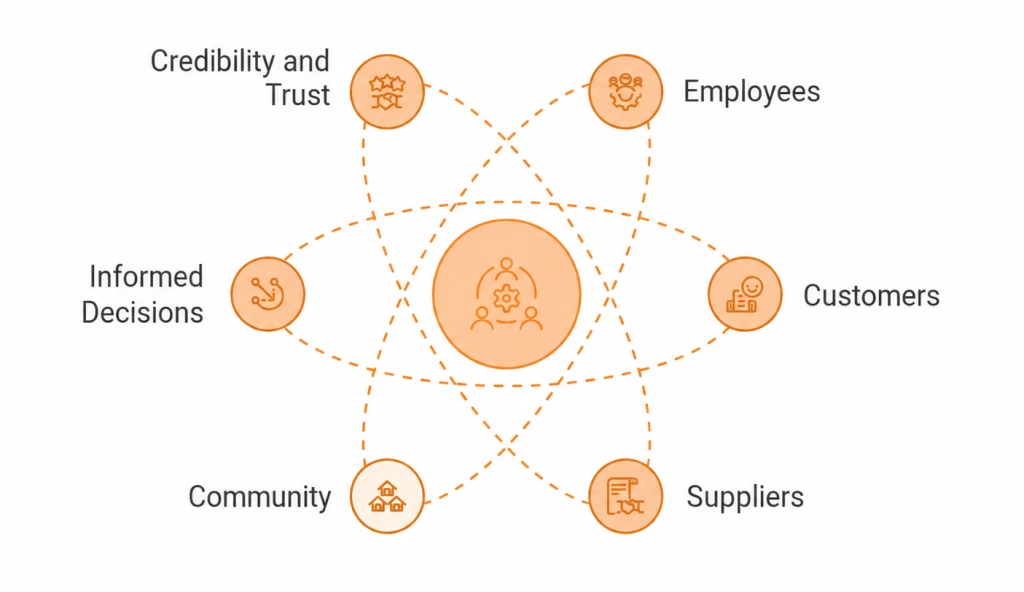
The stakeholder groups involved were prioritized based on Accountability’s AA1000 Stakeholder Engagement Standard (AA1000SES) and characterized according to dependency, responsibility, tension, influence, and each stakeholder’s perspective.
Details of the engagement exercise
The stakeholder groups that participated in the process included communities, government, employees, shareholders, suppliers, contractors, customers, and our business group, with representatives from Odinsa, Cementos Argos, and Grupo Argos.
Stakeholders participated through surveys and interviews, providing key input to identify and prioritize material impacts, risks, and opportunities for Celsia.
Employees
239
239
Customers
167
167
Shareholders
84
84
Communities
79
79
Suppliers
52
52
Media
45
45
Total
666
666
Celsia Leaders
18
18
Scientific and academic community
12
12
Business sector
12
12
Government/state entities
4
4
Investors and financial sector
2
2
Grupo Argos Business Group and subsidiaries
2
2
Total
50
50
714 interactions
694 surveys + 20 interviews
We Connect, Collaborate, and Create Impact
In 2025, we reviewed the characterization, prioritization, and harmonization of our stakeholder groups and concluded that no updates were required, as the groups identified continue to adequately reflect the reality of the business, our value chain, and the strategic relationships we maintain with the different stakeholders who influence or are impacted by our operations.

We have a manual for identifying and managing stakeholder engagement risks, including social, political, regulatory, and reputational risks. To strengthen stakeholder relationship management through the identification of the specific characteristics, needs, interests, expectations, and preferences of the stakeholders with whom we interact, we periodically review our stakeholder groups using the criteria of dependency, responsibility, tension, influence, and diverse perspectives, in accordance with the AA1000 Stakeholder Engagement Standard (AA1000SES).
During 2025, we conducted a review of the characterization, prioritization, and harmonization of our stakeholder groups. The assessment concluded that no updates were required, as the identified stakeholder groups continue to accurately reflect the nature of our business, our value chain, and the strategic relationships we maintain with the various stakeholders that influence, or are influenced by, our operations.
Who do we create impact for?